
Emotional Triggers: What Your Reactions Might Be Trying To Tell You

Sometimes the size of the reaction is telling you there's more happening than the moment itself.
You know those moments when something happens and your reaction makes perfect sense? Someone says something shitty. You're pissed. Someone hurts you. You're hurt. Something scary happens. You're scared. Nothing really mysterious there.
And then there are the other moments when the reaction is way out of proportion. Someone doesn't respond to your message and suddenly your brain has written an entire documentary about why they don't give a f*ck about you. Someone criticizes something insignificant and you feel absolutely gutted. Someone changes plans and you're angry for some reason. Someone's tone shifts slightly and your entire nervous system goes: Oh. Something’s wrong. Or somebody says one completely normal sentence and, for reasons you can’t explain, you want to cry, scream, leave, defend yourself, shut down or burn the entire relationship to the ground.
Welcome to emotional triggers.
Not every strong emotion is a trigger. Not every trigger is evidence of some huge unresolved trauma. And being triggered doesn't automatically mean your reaction is irrational. What it does mean is that something that’s happening now may have actually collided with something that already carries meaning for you. And that's where things get interesting.
WHAT ACTUALLY IS AN EMOTIONAL TRIGGER?
A trigger is something that activates an emotional response that’s connected to an existing association, fear, belief, memory, vulnerability or protective pattern or program. The important word there is existing.
Imagine someone says: “We need to talk.” Four words. One person thinks: Okay. About what? Another assumes they're in trouble. Another assumes the relationship is ending. Another spends the next six hours replaying every interaction they've ever had with that person for the past month. Same sentence. Completely different internal experiences.
The words alone didn't create all of that. They collided with whatever those words mean to the person hearing them. That's why your reactions can contain useful information.
THE PRESENT MOMENT CAN WAKE UP AN OLD STORY
Triggers happen fast. Sometimes your body has already reacted while your conscious mind is still trying to figure out what the hell just happened. Someone’s distracted. That must mean they're losing interest in me. Someone disagrees with you. That must mean they don't respect me. Someone sets a boundary. Omg I'm being rejected. Someone gives you feedback. Suddenly I've failed. Someone needs space. Yep, they're leaving.
Notice what happened?! We moved from event to meaning. And sometimes that meaning has a lot more history behind it than the present situation does. A dismissive tone may hit harder because you've spent years feeling unheard. Criticism might collide with an old belief that nothing you do is good enough. Distance might activate an expectation that people leave. Being misunderstood might hit the part of you that's spent half your life trying to explain yourself. Suddenly you're not just responding to this moment. The moment has opened up a much deeper wound.
THE SIZE OF THE REACTION CAN BE A CLUE
One of the most useful questions you can ask mid activation isn't: Am I overreacting? I actually don't like that question because it immediately assumes your emotional response is the problem. It’s not. A better question is: Does the intensity of my reaction match what just happened?
Maybe someone makes a mildly insensitive comment and you're mildly irritated. Makes sense. Maybe they make a mildly insensitive comment and you're shaking, crying and unable to think about anything else for three hours. Okay, that’s a problem. Something else may have been triggered and activated within. That doesn't mean the comment wasn't shitty or that your feelings aren't legit. It just means the reaction may be carrying information from somewhere else too. And that information is worth getting curious about.
YOUR REACTION ISN'T ALWAYS THE PROBLEM
Shadow work should never become a way of psychoanalyzing yourself into tolerating bad behaviour. Sometimes you're angry because someone crossed a boundary. Sometimes you're hurt because someone hurt you. Sometimes your nervous system is sounding an alarm because something genuinely isn't okay.
Understanding your patterns doesn't mean assuming you're always the problem. Sometimes the answer really is: I don't like how I'm being treated. And sometimes the situation is real and it's touching something older at the same time. Both can be true.
WATCH WHAT HAPPENS NEXT
The emotion itself is only part of the pattern and program. What do you do when it shows up? Do you chase? Withdraw? Overexplain? Attack? Apologize? Try to fix everything immediately? Ask for reassurance? Pretend you don't care? Become cold? Start gathering evidence? Replay the conversation seventeen thousand times?
That's where triggers start connecting to a larger pattern or program. Because something happens, you immediately assign meaning to it. The meaning creates an emotional reaction. And that reaction can activate a familiar protective behaviour. Which is why two people can experience almost identical situations and respond in completely different ways.
The interesting question isn't just: Why am I so upset? It's: What does being upset make me want to do? That can tell you a hell of a lot about what’s really going on within you.
THE TRIGGER ISN'T THE ENEMY
We sometimes approach emotional healing as though success means eventually becoming impossible to upset or bother. We think if we heal ourselves enough that we’ll never be jealous or angry. That we’ll never be anxious, or feel rejected. We think that if we heal enough we’ll never be triggered again. That’s super unrealistic. The goal isn’t to become some perfectly regulated robot floating through life unbothered while everyone else acts like an asshole.
Your reactions might be showing you:
This matters to me.
This scares me.
This feels familiar.
I don't feel safe here.
I need a boundary.
I'm assuming something I don't actually know.
You don't have to obey every reaction, or eliminate it either. Sometimes the reaction is just pointing to something you haven't fully understood yet. So the next time something hits considerably harder than expected, you don't need to immediately fix yourself. Start with one question: Why did this particular thing hit me this hard? And see where the answer takes you.
WANT TO EXPLORE WHAT'S UNDERNEATH IT?
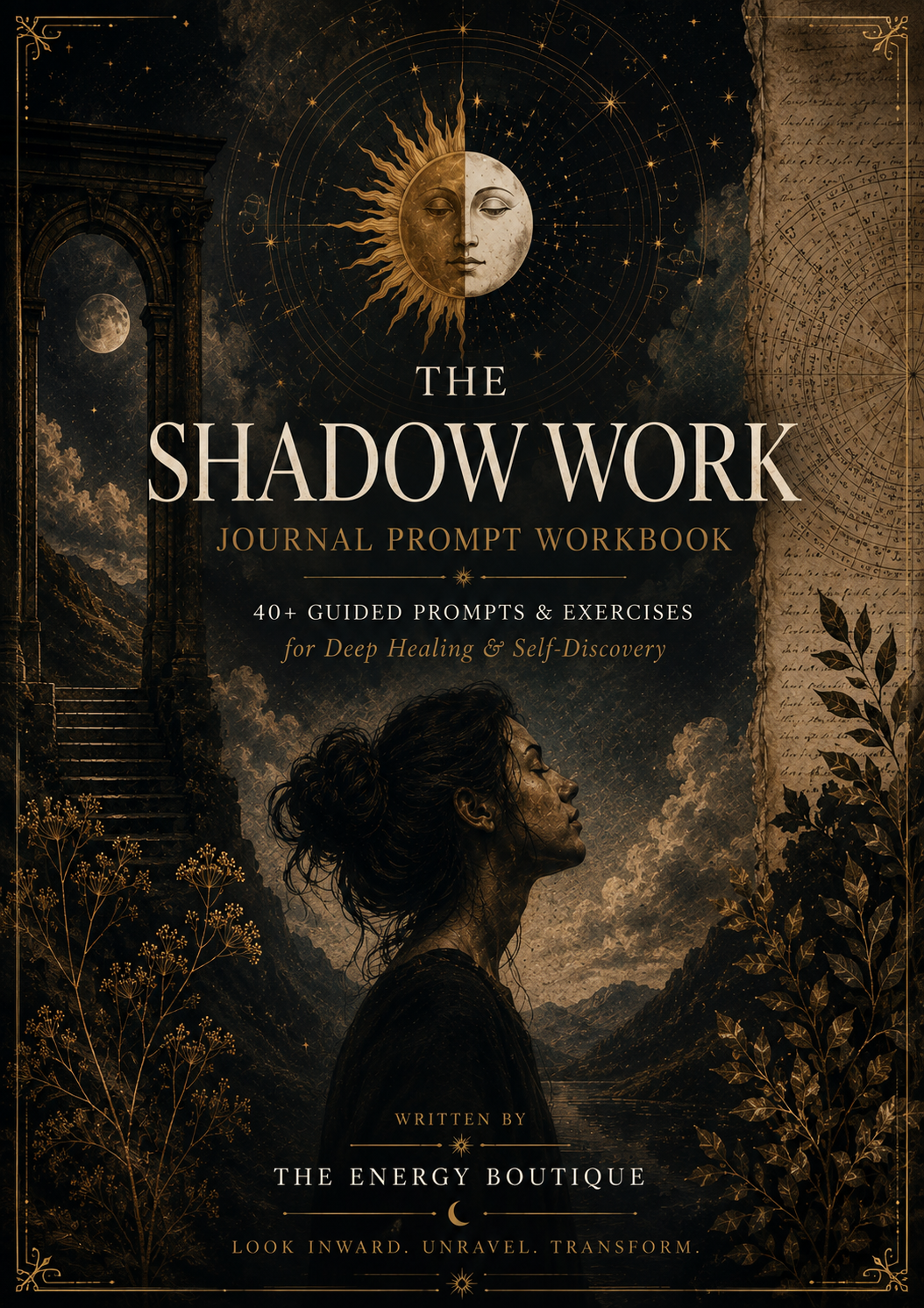
Emotional triggers rarely exist in isolation. They can connect to fear, control, rejection, identity, people pleasing, repeating relationship roles and the parts of yourself you've learned to protect.
The Shadow Work Journal Prompt Workbook takes you deeper into those connections through guided reflection designed to help you identify what's underneath your reactions and bring what you uncover together into your own Personal Pattern Map. Not another list of things you need to fix, but a way of seeing how the pieces connect.