
Shadow Work Prompts for Self-Discovery

Sometimes the hardest part of shadow work isn't discovering the answer. It's figuring out which question to ask. Most of us approach self-reflection from the perspective of what we already consciously know. We ask what we want, what we need to change, what we're unhappy with, or how we can become a better version of ourselves.
Those can be useful questions. But shadow work asks us to look somewhere different. Instead of only asking what you want to change, it asks you to become curious about the behaviours, reactions, judgments, fears, contradictions and recurring situations that may reveal something you haven't fully recognized yet… because sometimes the most useful information isn't hiding very well. It's repeating itself.
How to Use Shadow Work Prompts
You don't need to answer every question… you probably shouldn't. Shadow work isn't a questionnaire you're trying to complete correctly, and it’s definitely not something you want to rush through “just to get it done.” A good prompt interrupts your usual way of thinking long enough for you to notice something you may normally overlook.
Read through the questions slowly. Notice which ones immediately produce an answer. Notice which ones make you defensive. Notice which ones you want to skip. Notice which ones make you think, I don't know. And pay special attention to the ones that makes you think: F*ck this… I don’t want to do this anymore.
You don't need to force an answer. Sometimes your reaction to the question is all you need to know.
10 Shadow Work Prompts to Begin With
1. What situation keeps repeating in my life even though the people or circumstances change?
Patterns can be difficult to recognize when we're focused on the individual circumstances. Different relationship. Different workplace. Different friendship. But somehow, the experience feels familiar. Instead of focusing exclusively on who was involved or what happened, consider what pieces are consistent from one experience to another.
2. What do I pretend doesn't bother me?
There's a difference between honestly letting something go and convincing yourself you shouldn't care about it. What do you minimize? What do you laugh off? What do you insist is "fine" even though you continue thinking about it long after it happens? Sometimes what we're try the hardest to not to care about deserves the most attention.
3. What do I need other people to think about me?
Helpful? Strong? Independent? Successful? Easygoing? Intelligent? Kind? Reliable?
We all have characteristics we value and always want people o see the best parts of us. But it gets interesting when we go out of our way to portray an identity (or part of one) to be perceived in a way we want to be seen. When these motives begin influencing what we're willing (or not willing) to do, it has to make you wonder why is being seen in this way so important, and when did this behaviour/need begin? What happens when someone sees you differently than you want to be seen?
4. When do I say yes while internally wanting to say no?
Sometimes we agree because we genuinely want to help. Other times, the yes is avoiding something. Disappointment. Conflict. Judgment. Guilt. Rejection. Instead of immediately criticizing yourself for having “poor boundaries”, become curious about what saying yes may be protecting you from experiencing.
5. What kind of criticism is hardest for me to hear?
Not all criticism lands equally. A comment one person forgets five minutes later can stay with someone else for days. Consider which criticisms immediately make you defensive, ashamed, angry or desperate to explain yourself. This are the conversations you keep on loop, and replay while your in the shower, doing the dishes, or trying to fall asleep at night. Why does that particular accusation feel so threatening?
6. What behaviour in other people trigger a disproportionately strong reaction in me?
This doesn't mean every irritating person is secretly revealing your shadow. Some people are just irritating AF. But when the intensity of your reaction surprises even you… or the same characteristic repeatedly gets under your skin… it may be worth asking why. What does that behaviour represent to you? When did it start bothering you? How does it remind you of?
7. What do I call "being realistic" that might actually be fear?
Fear doesn't always feel like fear. Sometimes it sounds extremely reasonable. It's not the right time. I'm probably not ready. That wouldn't work anyway. I should wait until I know more. Practical thinking is useful. But occasionally "being realistic" becomes a very convincing argument for never risking discomfort.
8. What standards do I hold myself to that I don't expect from anyone else?
Would you speak to someone you love the way you speak to yourself after making a mistake? Would you expect another person to know everything, anticipate everything, manage everything and never become overwhelmed? If not, why is that the standard you're required to meet? Who (in your childhood) placed these expectations on you, and why do you still try to live up to them?
9. What am I trying to prevent by staying in control?
Control doesn't always look controlling. Sometimes it looks like preparation. Planning. Perfectionism. Overthinking. Independence. Constantly anticipating what might go wrong. Instead of asking yourself why you can't just "let go, and go with the flow" ask yourself what you think might happen if you did.
10. What would I do differently if nobody could be disappointed in me?
Don't immediately decide whether your answer would be practical, responsible or possible. Just notice what comes up. What would you stop doing? What would you start doing? What decision would suddenly become easier? Who would/could you become if everyone else's reaction were removed from the equation?
Don't Rush to Fix What You Find
When one of these questions reveals something uncomfortable, the instinct is often to immediately turn it into another self-improvement project. Okay. I people please. How do I stop? I'm afraid of rejection. How do I fix that? I need control. How do I let go?
Behaviour rarely changes just because we've decided we don't like it. Before trying to eliminate or correct a pattern, become curious about why it exists in the first place. If you don’t address the root cause of it, you’ll never really understand how it was created and you won’t be able to truly prevent it from taking on a new form.
What does it accomplish?
What does it prevent?
What does it help you avoid?
What does some part of you believe would happen without it?
You may discover that the behaviour you've spent years criticizing makes considerably more sense once you understand what it has been trying to do. That doesn't mean you have to keep it. It means you're beginning to work with the actual pattern instead of fighting its symptoms.
Want to Keep Going?
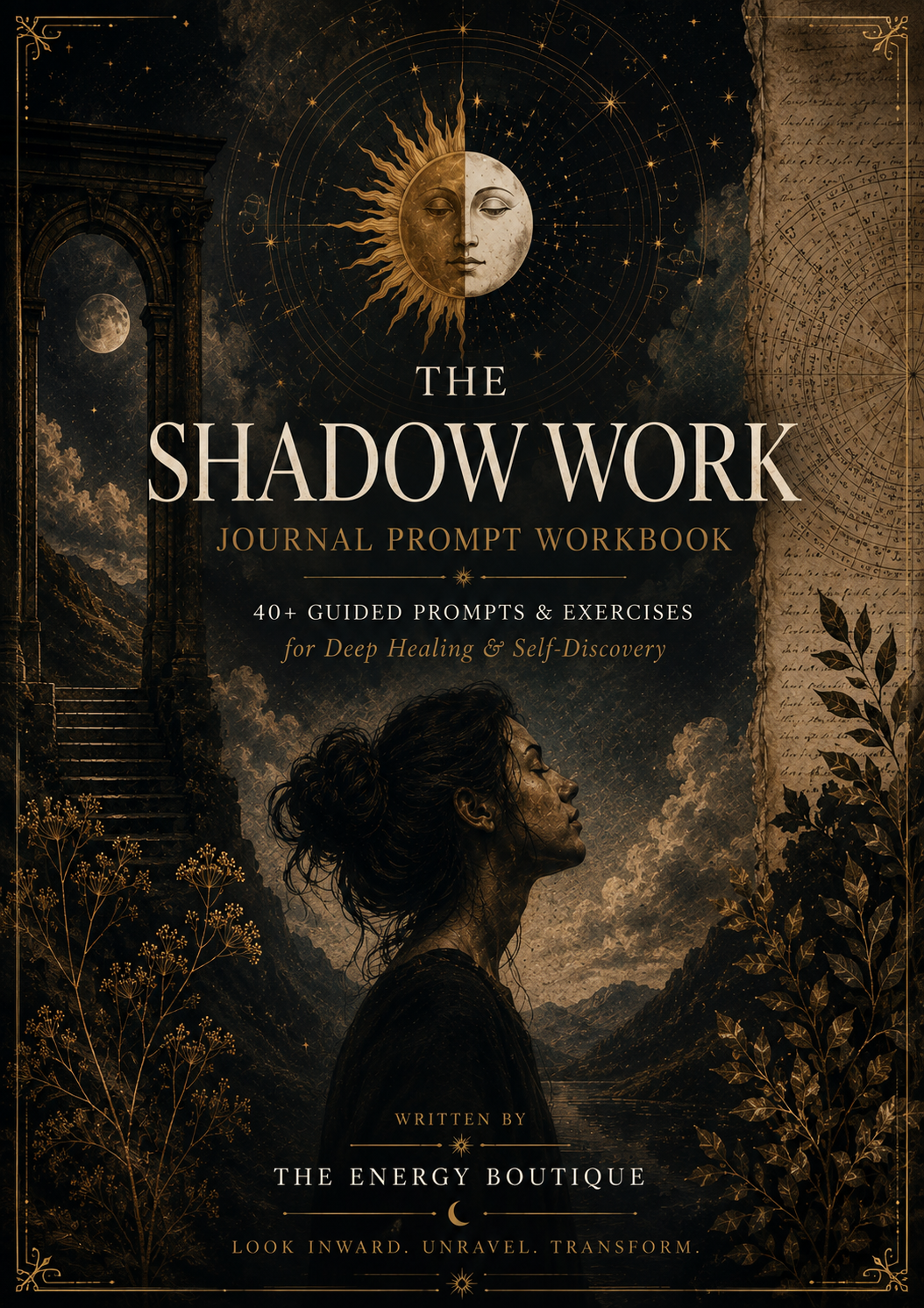
These ten questions are only a starting point. I've put together the Complete Shadow Work Self-Discovery Prompt Guide, with the full collection of prompts organized around:
repeating patterns
emotional triggers
the parts of yourself you hide
approval and people pleasing
control and uncertainty
judgment
fear and avoidance
Use them slowly. You don't need to work through the entire guide at once. Choose the questions that seem relevant to what you're experiencing now and pay attention to the ones you'd rather avoid.
Continue Exploring
If these questions helped you recognize something but you're not quite sure what you're looking at yet, continue with:
Why Do I Keep Repeating the Same Patterns?
Explore why familiar behaviours can continue even after you consciously understand them.
People Pleasing: Why You Do It & What It's Costing You
Look beneath the need to maintain approval, avoid disappointment and keep everyone else comfortable.
Emotional Triggers: What Your Reactions May Be Trying to Tell You
Learn how strong reactions can become information rather than something you immediately need to suppress or fix.
And if you're completely new to this work, begin with Shadow Work: What It Is, How It Works & Where to Start for the foundation behind these questions.